Getting to Bali first
Most divers flying in from overseas land at Bali's international airport near Denpasar, then make their way to the coast to catch a boat across to Nusa Lembongan. If you're coming from Sanur, Kuta or the airport itself, you'll head for Sanur harbour. If you're based on Bali's east coast, around Amed or Candidasa, the crossing from Kusamba harbour is usually shorter door to door.
Either way, book your boat a day or two ahead in the busier months, roughly April to November, since seats on the early departures do sell out.
The fast boat from Sanur
Several fast-boat operators run the Sanur to Nusa Lembongan route, and the crossing itself takes about 30 to 40 minutes depending on which company you're with and how the sea is running that day. Boats leave regularly through the morning and into the early afternoon, less often later in the day, so it's worth booking the crossing you actually want rather than turning up and hoping.
Large bags travel in a hold or lashed to the deck rather than at your feet, so keep your dive computer, camera, passport and anything else you'd hate to lose in a day bag you carry on yourself.
If you'd rather not compare operators and schedules on your own, contact Sober Diving before you travel. The shop is happy to help you book your boat tickets alongside your diving.
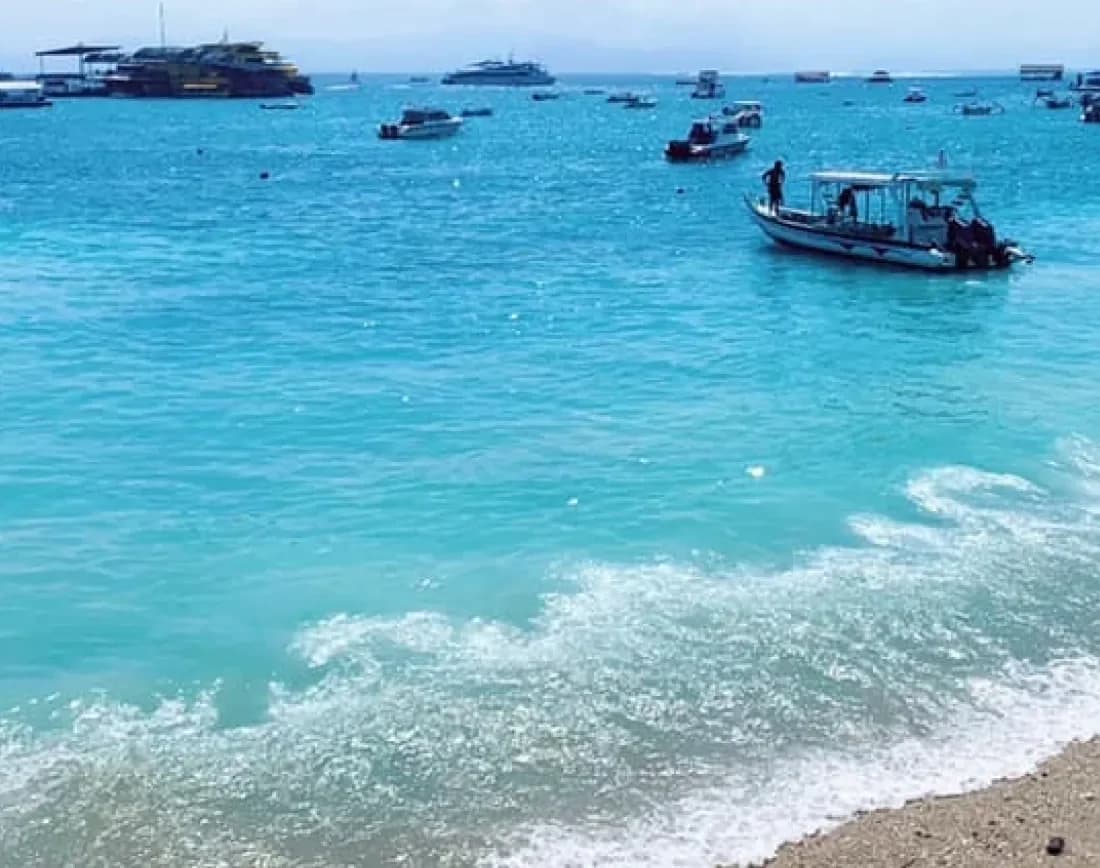
On the day, get to the harbour with time to spare. Most fast-boat counters ask you to check in some time before departure, and the area around Sanur harbour can be busy with agents and touts trying to sell you a different company's tickets, so it helps to already know which boat and which time you're on rather than deciding on the spot. Keep your ticket confirmation on your phone or printed, along with your passport if it's requested. At Sanur, boats commonly anchor a short way offshore rather than at a dock, so expect a similar short wade to board as you will at Jungut Batu when you land.
Crossing from Kusamba
The Kusamba route is used less by tourists but works well if your trip already has you on Bali's east coast. It's a similar length of crossing to the one from Sanur, and it lands you at the same beach on Nusa Lembongan. There are fewer daily departures than from Sanur, so check timings before you commit to this route rather than assuming boats run all day.
Landing at Jungut Batu
Nusa Lembongan doesn't have a deep-water harbour for these boats, so most fast boats beach directly onto the sand at Jungut Batu rather than pulling up to a jetty. That means the last few metres are done on foot, wading through shin-to-knee-deep water while the crew hands bags down from the boat.
Wear sandals or reef shoes you don't mind getting wet, and if you're carrying anything electronic, put it in a dry bag or hold it above the waterline rather than trusting it to a backpack pocket. Some boats and some tide conditions do allow a drier landing, so this isn't universal, but it's common enough that you should plan for wet feet rather than be caught out by it.
From the harbour to Sober Diving
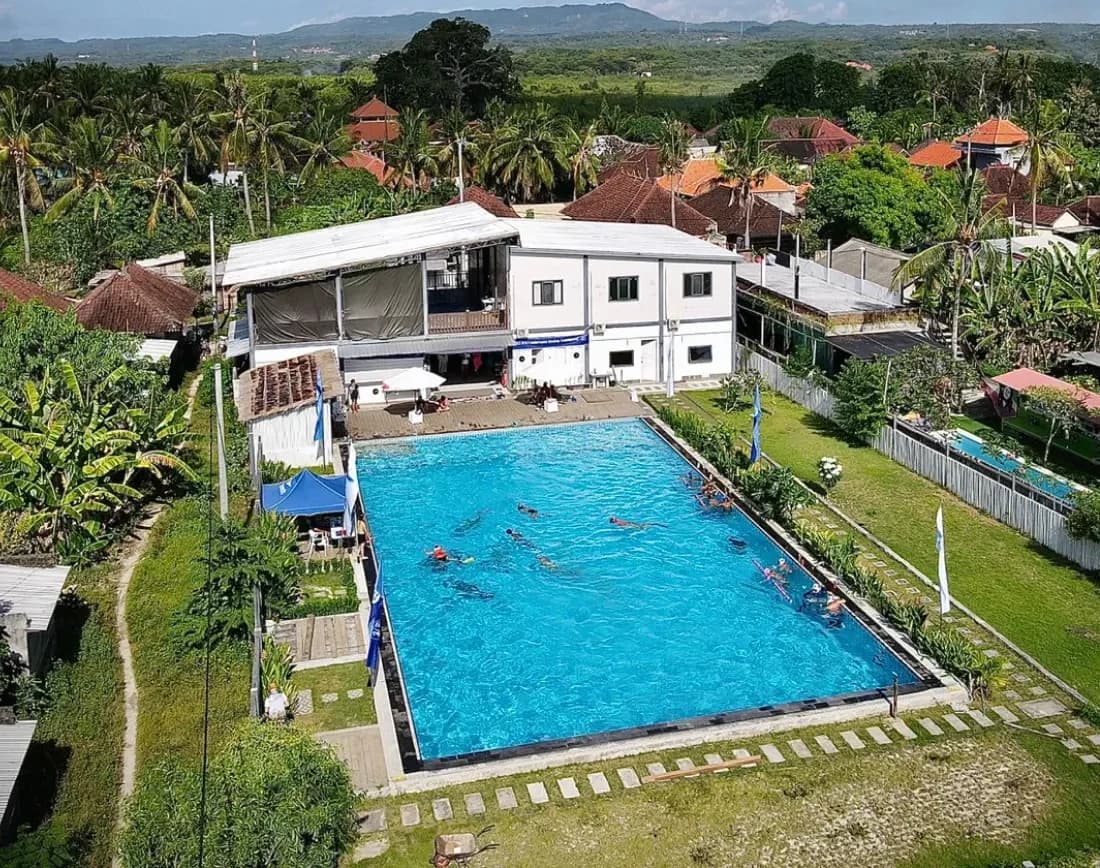
Sober Diving is on the main road through Jungut Batu, about five minutes away from the harbour by bike or car, and one minute's walk from the beach itself. If you've booked a course or dive with the shop, mention your boat arrival time when you book and it's easy to arrange a pickup, or you can flag down one of the local drivers waiting at the beach for the short ride up.
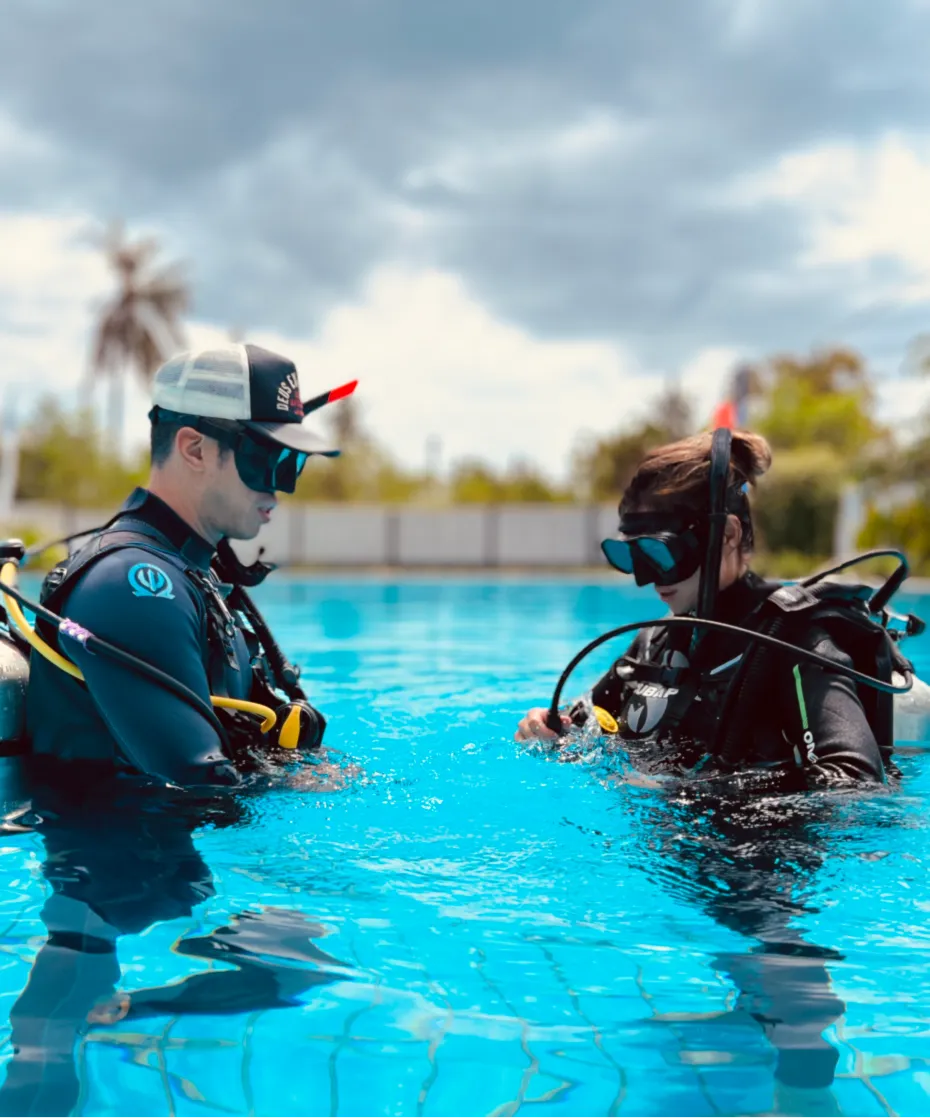
Once you're settled in, the pool and classrooms are right there for pool sessions, and the boats leave from the same stretch of beach for the dive sites around Nusa Penida and Nusa Ceningan.
What to pack
Bring swimwear, a rash guard or wetsuit top if you feel the cold, reef-safe sunscreen, and a sarong or light layer for the boat rides, since the wind picks up once you're moving. If you dive with your own mask, fins or computer, a wheeled bag copes with Lembongan's dusty roads better than a hard case.
You don't need to bring your own regulator or BCD unless you prefer your own gear: Sober Diving's equipment is Scubapro and serviced in-house. ATMs on the island are limited, so carry more rupiah than you think you'll need for the days you're here rather than relying on finding a working machine.
- Swimwear, rash guard or thin wetsuit top
- Reef-safe sunscreen and a sarong for the boat
- Wheeled bag rather than a hard case, if bringing your own gear
- Enough rupiah for your stay, ATMs on the island are limited
Flying out after diving
Give yourself a proper surface interval before you fly. The commonly used guideline, based on DAN's Flying After Diving research, is a minimum 12-hour wait after a single no-decompression dive, and at least 18 hours after multiple dives in a day or multiple days of diving in a row.
If your trip finishes with a few days of fun diving or a course, plan your last dive day with that gap in mind rather than booking a flight for the same evening. Your own dive computer will show a no-fly time based on your actual dive profile, which is worth checking against the general guideline rather than relying on the guideline alone. If your onward flight is the next morning, an easy way to build in the gap is to make your last full day of diving a two-dive morning and take the afternoon and evening off the water before travelling back across to Sanur.