
PADI course
Marine Conservation Courses in Nusa Lembongan
We run three separate conservation programmes: PADI Project AWARE, a classroom-only day open to anyone, and two diving programmes, AWARE Dive Against Debris and Manta Ray and Mola Mola Conservation. Each ends in its own PADI certification.
4.9 from 423 Google reviews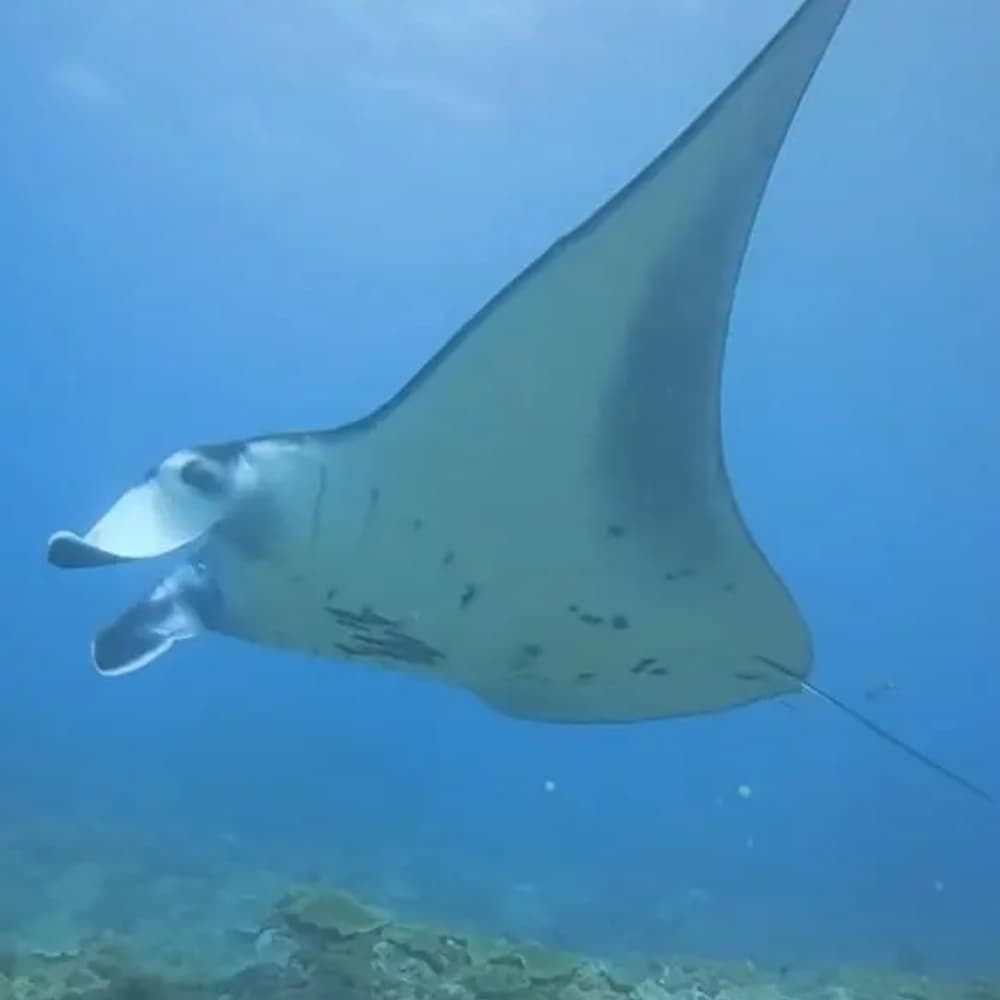
- From
- IDR 1,000,000
- Duration
- Half a day to 1 day, depending on the programme
- Ocean dives
- 0 for Project AWARE, 2 for the diving programmes
- Prerequisite
- None for Project AWARE; PADI Open Water Diver or equivalent for the diving programmes
- Minimum age
- All ages for Project AWARE; 10+ for the diving programmes
- Group size
- 1 instructor to up to 3 students
- Certification
- Project AWARE, Dive Against Debris, or Manta Ray and Mola Mola Conservation
Three ways to get involved
Project AWARE is classroom-only and open to non-divers, so it works even if you are not diving on this trip at all. The other two, Dive Against Debris and Manta Ray and Mola Mola Conservation, each pair a short classroom session with 2 dives.
You can take any of the three on their own, and several divers do all three across a longer stay, since each one covers different ground rather than repeating the same material.
PADI Project AWARE
A half-day, non-diving programme covering why the ocean matters, the specific pressures on reefs, seagrass and mangroves around Nusa Lembongan, and PADI AWARE's Ten Tips for Divers to Protect the Underwater World. It ends with practical steps you can actually take, not just awareness.
Because it involves no diving at all, it is a genuine option for a non-diving partner or family member travelling with you, or for anyone who wants to understand the reef before getting in the water for the first time.
AWARE Dive Against Debris
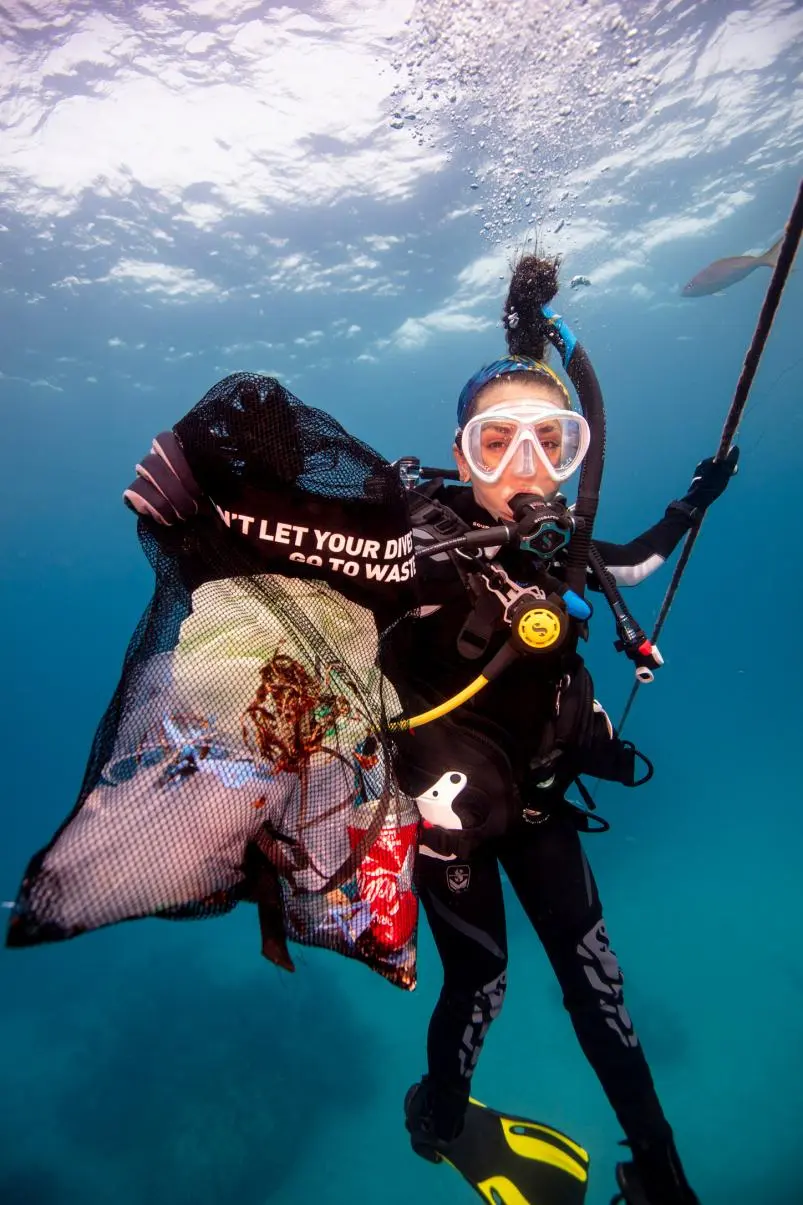
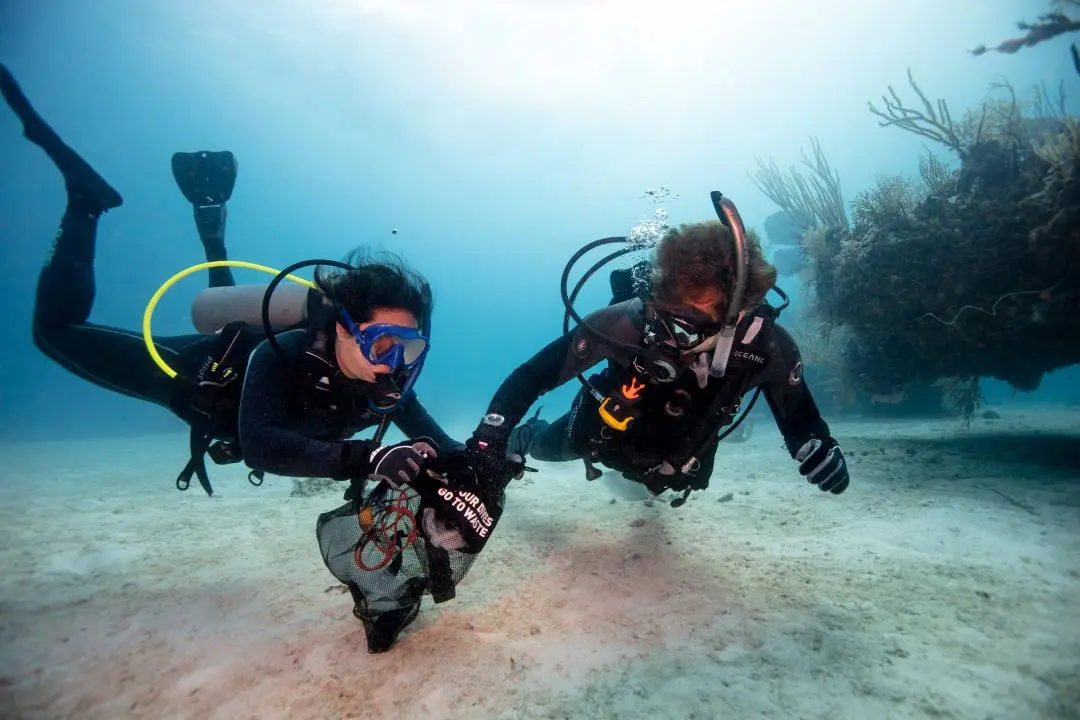
You learn to identify marine debris, plan a proper survey using mesh bags, shears and gloves, and remove debris safely without damaging the reef around it. Data from your dive gets logged to PADI AWARE's global Dive Against Debris database, which is used in real research on marine litter. It overlaps closely with the skills taught in our Search and Recovery specialty.
It is deliberately practical rather than purely educational. You come away having actually removed debris from a real site, with the classroom half explaining why the survey method matters and how the data you collect gets used beyond just the day itself.
Removal is done carefully, not by yanking at anything tangled in coral. Part of the classroom session covers when to leave something in place rather than risk damaging the reef trying to free it, which is as much a skill as the removal itself.
Manta Rays and Mola Mola Conservation
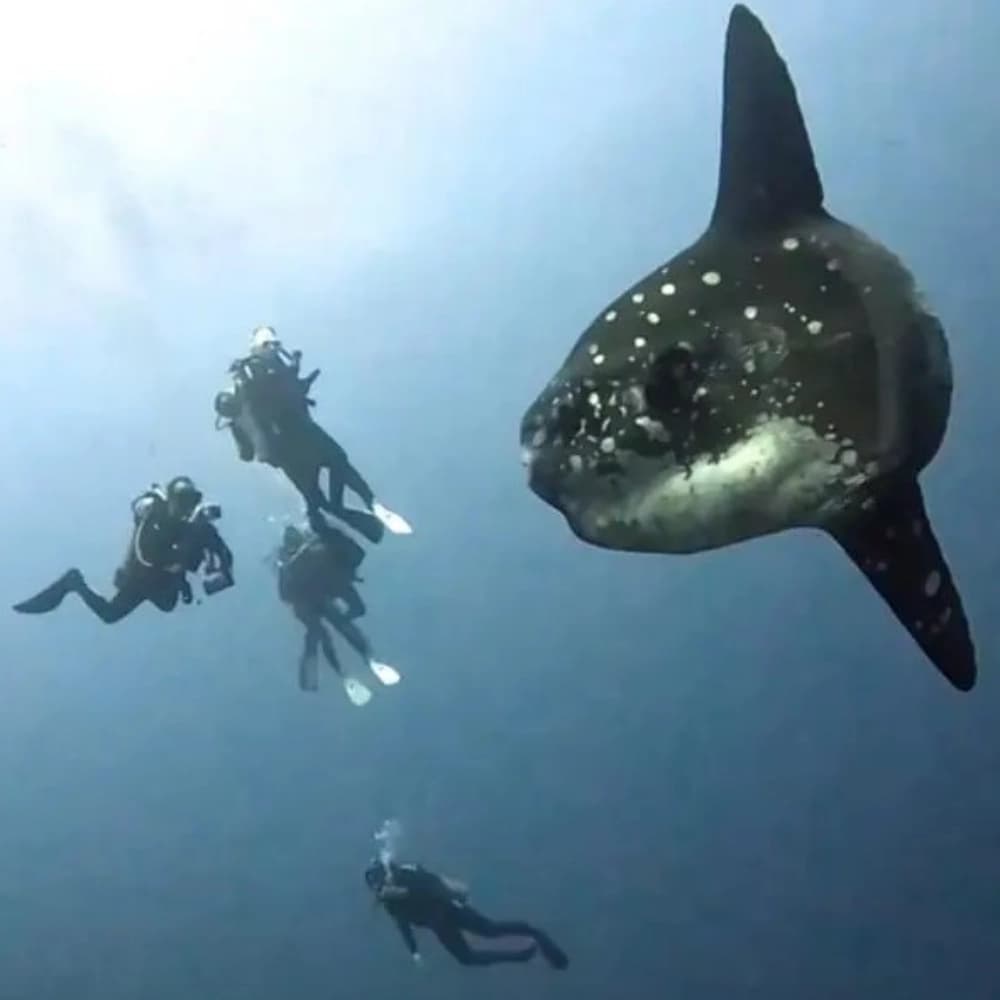
This course covers the biology of both animals properly: the reef manta ray (Mobula alfredi) that you are most likely to see at Manta Point and Manta Bay, and the much larger, more pelagic oceanic manta ray (Mobula birostris), an occasional visitor. The sunfish seen around Crystal Bay is usually Mola alexandrini, the bumphead sunfish, though it is still commonly called mola mola locally, and is among the heaviest bony fish in the world.
You also cover the real threats these animals face, overfishing, plastic pollution and uncontrolled tourism contact, and the passive interaction guidelines that keep divers from disturbing them: keeping your distance, no touching, no chasing, no flash photography. Sightings you log can contribute to ongoing population research being carried out around Nusa Penida.
This course only requires PADI Open Water Diver certification, not Advanced, so it is genuinely accessible to newly certified divers who want to put their first certification to use somewhere meaningful.
Why this matters here
Nusa Penida holds a genuinely significant population of reef manta rays, and researchers are actively studying it. Diving here responsibly, and understanding what you are looking at, is a small but real part of keeping that population healthy for the long term.
Marine debris is also a real, visible issue around the islands, not an abstract problem from somewhere else. Divers who complete Dive Against Debris here are working on the same reefs they dive for fun the rest of their trip.
None of this requires a dramatic lifestyle change to matter. Divers who take one of these courses tend to notice small things afterwards, buoyancy near the reef, where their fins are, what they do with rubbish on a boat, that add up across a season of visitors far more than any single course does on its own.
Booking a conservation day
Read more about the animals themselves on our manta ray and mola mola pages, then book online or contact us directly to arrange a date.
Questions
Do I need to be a certified diver to do a conservation course?
Only for the two diving programmes. PADI Project AWARE is classroom-only and open to non-divers of any age.
What is the difference between the manta ray course and Dive Against Debris?
Manta Rays and Mola Mola Conservation focuses on the biology and protection of those two animals. Dive Against Debris teaches survey and removal technique for marine litter and feeds data into a global research database.
What is a reef manta versus an oceanic manta?
The reef manta ray (Mobula alfredi) is the one you will most likely see around Nusa Penida, staying near coastal reefs. The oceanic manta ray (Mobula birostris) is larger and more pelagic, and is seen here far less often.
Is the sunfish at Nusa Penida really called mola mola?
The species usually seen here is Mola alexandrini, the bumphead sunfish, though it is still commonly known as mola mola locally. True Mola mola exists too, but the two are easily confused and were only properly separated by researchers relatively recently.
Does the conservation course count toward a PADI specialty?
Dive Against Debris and Manta Ray and Mola Mola Conservation are their own PADI programmes rather than adventure dives, so they do not automatically credit toward Advanced Open Water, but the skills overlap well with our Search and Recovery specialty.
How does Dive Against Debris data get used?
Every survey you log is submitted to PADI AWARE's global Dive Against Debris database, which researchers and policymakers use to track marine debris patterns over time.
Book Conservation
Tell us your dates and experience. We will confirm the schedule, your instructor and everything you need to bring.