
Nusa Penida
Crystal Bay diving in Nusa Penida
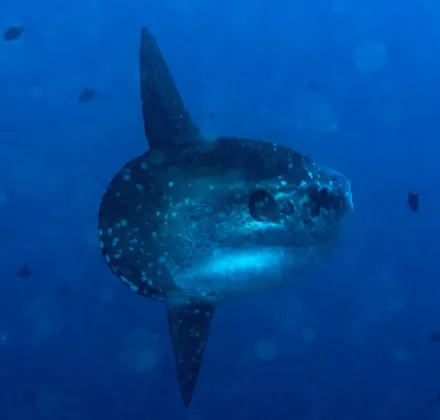
Nusa Penida's best-known mola mola site, where a cold seasonal upwelling brings the ocean sunfish up to a cleaning station between July and October, and a real current that deserves respect the rest of the year too.
- Depth
- 5 to 30 m
- Level
- Advanced, experienced in current
- Current
- Variable, can be strong
- Boat ride
- 20 to 30 minutes from Jungut Batu
- Best time
- July to October for mola mola; diveable year round
- Fuel surcharge
- No
About Crystal Bay
Crystal Bay sits on Nusa Penida's west coast, where a shallow, sheltered bay gives way to a steep drop-off into open water. It is the site every mola mola search in Bali eventually points to, and for good reason: between July and October, cold water rising through the strait carries the ocean sunfish up to cleaning stations that recreational divers can actually reach.
Outside that window, Crystal Bay is still a proper dive, with a wall dropping past recreational limits, reef sharks, turtles and a healthy population of macro life for anyone happy to slow down and look closely. Visibility is generally excellent, often 15 to 30 metres, which is part of what gave the bay its name.
The dive
Your guide usually keeps the group near the bay's rocky points, sheltered from the worst of the current, watching the blue for a shape rising out of it. If a mola mola appears, the rule is to stay calm, hold your position and let your guide lead the approach. Swimming straight at one is the surest way to send it back into deep water.
This is not a beginner site. Currents around Crystal Bay can be strong and unpredictable, and down-currents are a genuine, documented hazard here, which is why Sober Diving asks for Advanced Open Water certification and some logged dives in current before booking this trip. A surface marker buoy is carried on every dive, and your guide will brief an exit plan before you go in, not after conditions have already turned.
Morning trips tend to see more boats stacked over the same stretch of water, since everyone chasing a mola mola sighting wants the calmest, earliest conditions. A quieter afternoon slot can mean fewer bubbles and less noise around the cleaning station, though it comes with less certainty about the day's current by that point.
What you will see
From July to October the mola mola is the main draw, hovering at a cleaning station while small fish work over its skin, sometimes for several minutes at a time. The rest of the year, and alongside any mola encounter, look for whitetip reef sharks, Napoleon wrasse, green turtles and, if you slow down over the reef, frogfish and nudibranchs.
A cold thermocline typically sits around 18 to 22 metres, where the temperature can drop into the high teens Celsius. Bring a 5 mm wetsuit if you are diving during the season. For the full picture on the species and how to behave around it, see our mola mola guide.
Best time and who it suits
July to October is mola mola season, with sightings never guaranteed on any single dive but improving across a full day of diving. The rest of the year, Crystal Bay is worth diving for the wall, the current-fed marine life and the macro life in its shallower corners.
Because of the current and the depth, this site suits divers with an Advanced Open Water certification and drift experience, or those willing to build it first. Our Advanced Open Water course and drift diving specialty both prepare you for exactly this kind of site.
Crystal Bay: questions
Is Crystal Bay dangerous?
Crystal Bay is a real current site with a documented down-current hazard, which is why Sober Diving only takes Advanced Open Water divers with current experience there and always dives it with a briefed local guide. Diving it with a properly run operator and following the briefing is how it is dived safely every day.
When is mola mola season at Crystal Bay?
Roughly July to October, when a cold-water upwelling brings the fish up to shallower cleaning stations. Sightings are seasonal, not guaranteed on any one dive.
Do I need Advanced Open Water to dive Crystal Bay?
Yes. Sober Diving requires Advanced Open Water certification and some experience diving in current before booking this site, because of the strength and unpredictability of the current.
Will I definitely see a mola mola if I dive in season?
No sighting is guaranteed. Diving multiple times across the season, and across a full day rather than a single dive, meaningfully improves your odds.
What should I wear at Crystal Bay in mola season?
A 5 mm wetsuit is recommended. The thermocline around 18 to 22 metres brings noticeably colder water than the rest of Nusa Penida.
Dive Crystal Bay with us
Tell us your certification level and logged dives, and we will plan the days around the sites you want to see.