
Nusa Penida
Manta Bay diving in Nusa Penida
A shallower, calmer alternative to Manta Point on Nusa Penida's south-west coast, where reef manta rays glide past to feed rather than stopping to be cleaned.
- Depth
- 5 to 15 m
- Level
- Open Water
- Current
- Gentle
- Boat ride
- 15 to 25 minutes from Jungut Batu
- Best time
- Year-round, best April to November
- Fuel surcharge
- No
About Manta Bay
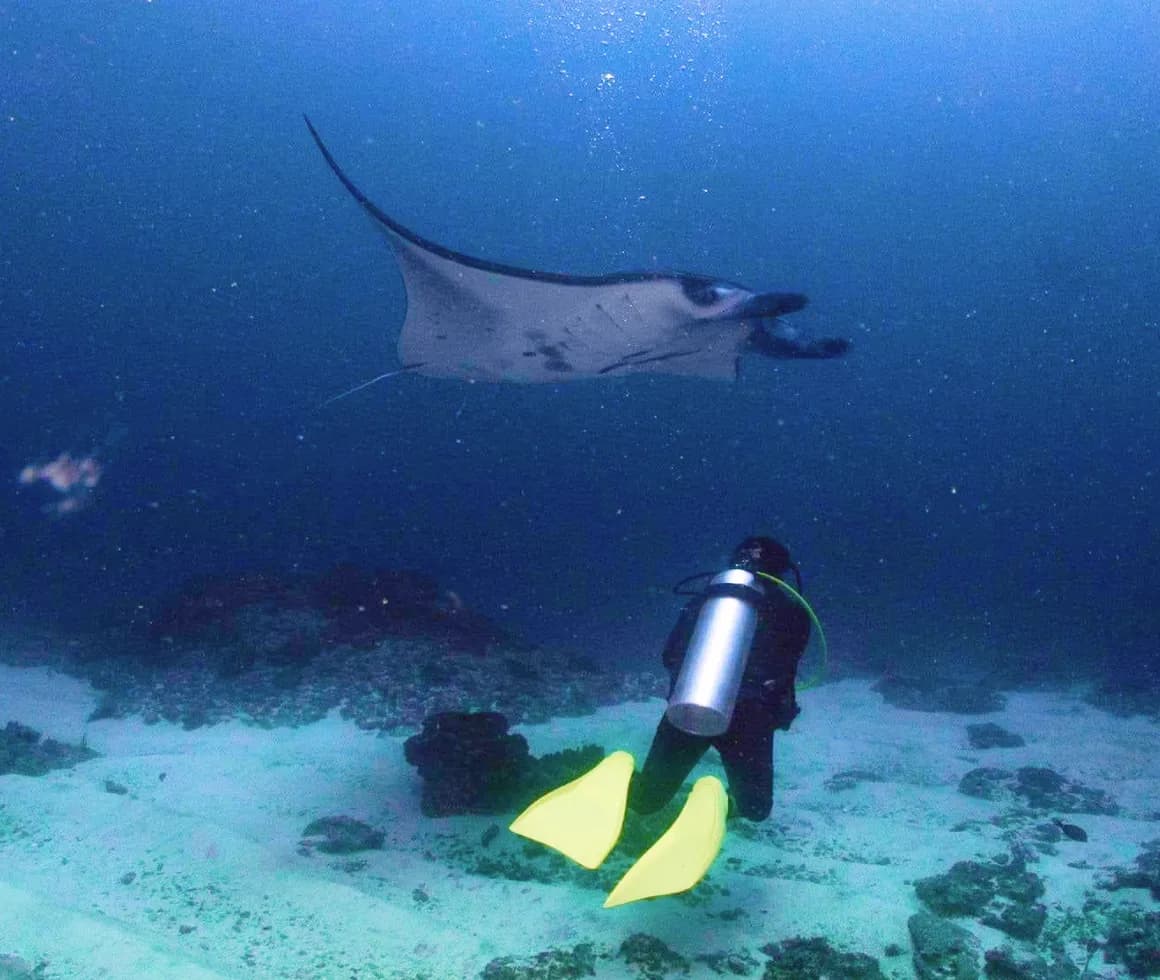
Manta Bay lies a short distance from Manta Point on Nusa Penida's south-west coast, and the two are often compared because both put you in the water with reef manta rays. The difference is what the mantas are doing. At Manta Point they queue at a cleaning station; at Manta Bay they are usually feeding, sweeping through the shallows with their mouths open to filter plankton near the surface.
The bay itself is shallow and rocky, with a maximum depth most operators keep to around 15 metres and an average closer to 9, which is part of why Sober Diving uses it as a backup when Manta Point is too crowded or the swell has picked up. Visibility runs anywhere from 8 to 25 metres depending on the day, generally a touch less predictable than at Manta Point.
The dive
Because the mantas are feeding rather than holding position, the dive is more about positioning than waiting. Your guide finds a spot with a good view of the feeding path and asks you to hold still rather than swim toward the animals, since a manta that is startled off its feeding line simply moves elsewhere. Feeding groups can include several mantas at once, stacked loosely behind each other as they work the same current line for plankton.
Surface conditions can be choppy here, since the bay is more exposed to open ocean swell than the cliffs around Manta Point. Expect some surge near the surface even when the visibility below is good, and treat the entry and exit with the same care you would any open, rocky shoreline.
What you will see
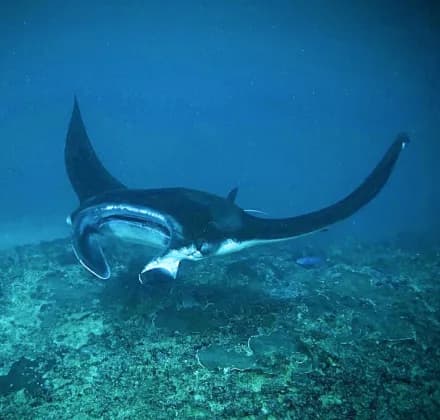
Reef manta rays are the highlight, often seen closer to the surface than at Manta Point and sometimes in small groups working the same feeding line together. The rocky bottom holds stingrays and a mix of reef fish, and turtles pass through occasionally, though they are not the reason most divers book this site.
Because the water here is shallower and often a touch warmer near the surface, it is also a reasonable option for confident snorkellers travelling with a diving group, watching the same feeding mantas from above while the divers work below. For the full picture on how reef mantas feed, clean and behave around divers, see our manta ray guide.
Best time and who it suits
Manta Bay is diveable year round, though the calmer months from April to November generally give better surface conditions. It suits Open Water divers and above who are comfortable with some surface chop and boat traffic, rather than absolute first-timers, since entry and exit can be less sheltered than at Manta Point.
Sober Diving typically pairs Manta Bay with another Nusa Penida site on the same fun diving day, so ask when booking whether Manta Point or Manta Bay fits the day's conditions better, and expect your guide to make the final call once the boat is on the water. Neither site is objectively better than the other, and many divers are happy to let the operator choose rather than fixate on one name over the other.
Manta Bay: questions
Is Manta Bay better than Manta Point?
Neither is strictly better. Manta Point gives you a cleaning station where mantas hold still; Manta Bay gives you mantas feeding, usually in shallower water with more surface movement. Many divers do both on the same trip.
Can beginners dive Manta Bay?
It suits confident Open Water divers rather than first-time Discover Scuba Diving guests, mainly because of the surface chop and open-ocean exposure rather than the depth itself.
Do I need to know if I am diving Manta Point or Manta Bay in advance?
Book as a manta trip and let your guide choose on the day. Conditions, crowding and the animals' behaviour all factor into which site works best that morning.
Are the manta rays at Manta Bay the same species as Manta Point?
Yes, both sites see the reef manta ray, Mobula alfredi. Read more in our manta ray guide.
Dive Manta Bay with us
Tell us your certification level and logged dives, and we will plan the days around the sites you want to see.