
Nusa Penida
Manta Point diving in Nusa Penida
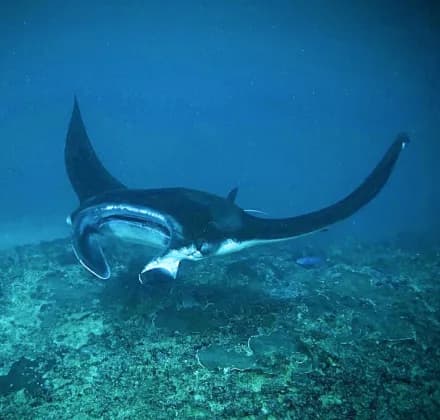
A shallow bay on Nusa Penida's south coast where reef manta rays circle a cleaning station most days of the year, and the easiest big-animal dive most divers do on the island.
- Depth
- 5 to 20 m
- Level
- All levels
- Current
- Gentle
- Boat ride
- 15 to 25 minutes from Jungut Batu
- Best time
- Year-round, mornings calmer than afternoons
- Fuel surcharge
- Yes, 150,000 IDR
About Manta Point
Manta Point sits inside a bay on Nusa Penida's southern coast, ringed by limestone cliffs that drop into a coral slope. It is one of the shallowest sites on Sober Diving's fun diving rotation, and the one most likely to put you face to face with a reef manta ray on your first attempt.
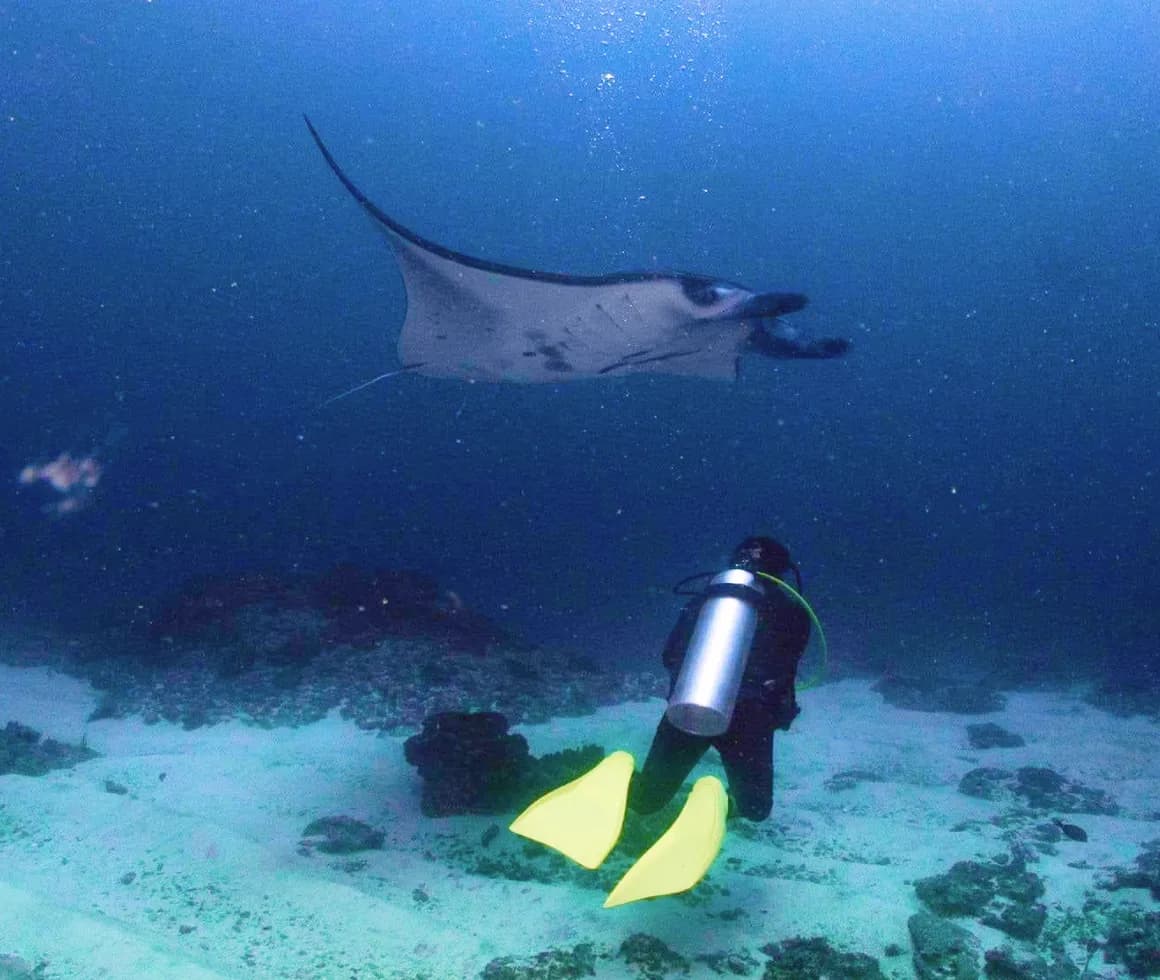
The site works because a cleaning station sits over the coral at a comfortable depth, and reef mantas return to it to have parasites picked off by small cleaner fish. You are not chasing anything here. You settle low over the reef, stay still, and let the mantas come to you.
Visibility at Manta Point usually runs 10 to 20 metres and the water is noticeably cooler than at Sober Diving's home sites on Lembongan, generally 20 to 26°C, so a wetsuit thicker than you might expect for Bali is worth having. No dive site can promise wildlife on demand, but Manta Point's cleaning station is used often enough that most trips here end with at least one good encounter.
The dive
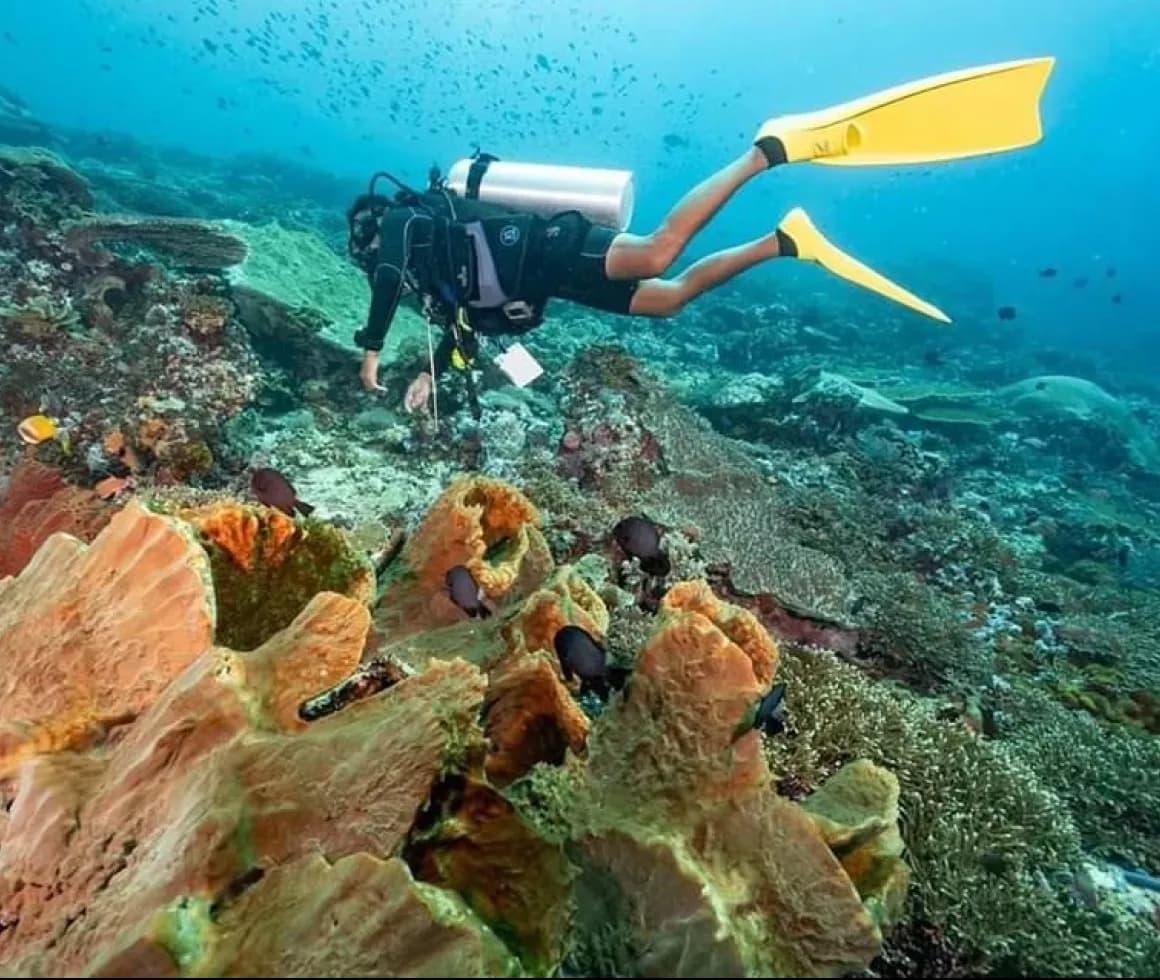
Your guide drops you close to the cleaning station and the plan is simple: find a spot on the sand or low coral, keep your fins off the reef, and wait. There is little current to fight, which is why Sober Diving books this site for everyone from Discover Scuba Diving guests to divemasters, weather permitting, and why the same Manta Point fuel surcharge applies whether you are here on a certified fun dive or a Discover Scuba Diving try-dive.
The one thing to watch is the surface. Wind and swell tend to build through the morning, so the sea can turn choppy and visibility can drop later in the day. The main cleaning station gets crowded too, since every operator on the island runs the same site, so an early start from Jungut Batu makes a real difference to how much space you get, both from other divers and from the boats stacked up on the surface above.
What you will see
Reef manta rays are the reason to come, gliding in to feed or hovering at the cleaning station while cleaner fish work over their gills and skin. Away from the mantas, the slope holds blue-spotted stingrays tucked into the sand, whitetip reef sharks resting under ledges, and green and hawksbill turtles moving over the coral.
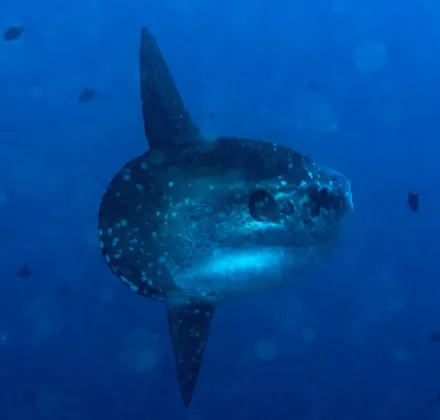
No sighting is ever guaranteed, though this is about as close to reliable as it gets. Keep an eye on the blue water off the reef too. Manta Point sits close enough to deeper water that a mola mola occasionally passes through outside its usual Crystal Bay season, though it is never the reason to book this trip. For the background on how reef mantas behave and how to dive around them properly, read our manta ray guide.
Best time and who it suits
Manta rays are present at Manta Point all year, so there is no season to plan around the way there is for mola mola at Crystal Bay. Morning boats get calmer seas, clearer water and fewer divers at the cleaning station, which is why Sober Diving runs this as an early trip where possible.
The gentle current and shallow depth make Manta Point one of the few Nusa Penida sites genuinely open to newly certified divers and confident Discover Scuba Diving guests, alongside experienced divers who simply want a reliable encounter. If you are still working out your certification level, our Open Water course covers everything you need before booking, and Manta Point is often run alongside another south Nusa Penida site on the same day out.
Manta Point: questions
Will I definitely see a manta ray at Manta Point?
No sighting is ever guaranteed, but Manta Point has one of the most reliable manta encounters in Nusa Penida because the cleaning station is used year round. Morning dives generally give you the best odds, before the sea picks up.
Is Manta Point suitable for beginners?
Yes, within reason. The site is shallow with little current, so it works for confident Discover Scuba Diving guests and newly certified Open Water divers, though your instructor or guide will always check conditions on the day first.
Do I need a special course to dive with manta rays?
No certification is required specifically for mantas. Good buoyancy control matters more than any card, since kicking up sand or brushing the reef near a cleaning station disturbs the animals and the divers around you.
Why does Manta Point cost more than other fun dives?
It carries a fuel surcharge because it is further from Jungut Batu than most of Sober Diving's regular sites.
What is the difference between Manta Point and Manta Bay?
Manta Point is a cleaning station where mantas hold still to be cleaned, while Manta Bay is shallower and sees mantas passing through to feed. Both sit on Nusa Penida's south-west coast and are often run on the same trip.
Dive Manta Point with us
Tell us your certification level and logged dives, and we will plan the days around the sites you want to see.