Two different manta sites, one marine park
Nusa Penida has two well-known places to find manta rays, and despite the shared theme they're quite different dives. Manta Point sits on the exposed south-west corner of Penida, while Manta Bay is a sheltered spot on the west coast below the Kelingking cliffs, roughly 20 minutes away by boat. Most fun-dive itineraries that head to Penida's manta sites pick one or the other for the day, based on conditions, rather than trying to do both.
Manta Point: a cleaning station
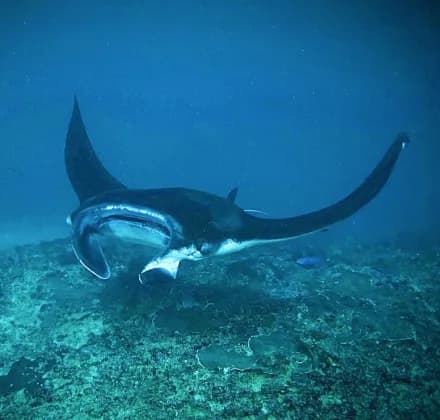
Manta Point is a genuine cleaning station: reef mantas, and occasionally the larger oceanic manta, gather here to have parasites picked off by cleaner fish, which is why sightings are frequent through the year rather than tied to a season. The site faces open ocean, so it picks up real swell and surge, with depths running from shallow down to around 15 to 20 metres depending on which part of the site you're on.
It's a dive rather than a snorkel. See our safety and conditions guide for how the shop manages the surge here.
Manta Bay: a feeding spot
Manta Bay is a feeding site rather than a cleaning station, which changes the water and the experience. Mantas come here to filter-feed on plankton, so the water tends to be greener and less clear than at Manta Point, and it's shallower and more sheltered, closer to sea level than open ocean surge. That combination, shallow water and calmer conditions, is also why Manta Bay is a popular option for snorkellers as well as divers.
Because the mantas are feeding rather than queuing at a fixed cleaning spot, they tend to move around more within the bay, so guides watch for where the plankton is concentrated that day rather than heading to one fixed point regardless.
Which site suits which diver
If you want a proper dive with a chance of seeing multiple mantas queuing at a cleaning station, and you're comfortable with some surge and current, Manta Point is the classic choice. If you're newer to diving, snorkelling instead, or diving with a mixed group that includes non-divers, Manta Bay's calmer, shallower water makes it the easier option without giving up much chance of a sighting.
Sober Diving's guides choose between the two based on the day's swell and the group's experience rather than running the same site regardless.
Diving responsibly around mantas
Both sites work because the mantas keep coming back, and that depends on divers behaving well around them. Keep a reasonable distance rather than swimming straight at a manta or crowding a cleaning station, approach slowly and stay low rather than looming over the reef, and skip the flash on your camera, since it can disturb an animal that's already tolerating a boat full of people watching it feed or get cleaned. Never touch a manta, even if it swims close to you of its own accord.
Guides brief this at the start of every manta dive, and it's worth taking seriously even if it feels like common sense: these are the same rules that keep both sites worth visiting for the next diver after you.
Getting to both from Nusa Lembongan
Both sites are a normal part of a Nusa Penida dive day from Sober Diving's base in Jungut Batu, and neither requires staying on Penida itself. See Nusa Lembongan vs Nusa Penida if you're still deciding where to base your trip. A fuel surcharge applies for the boat trip out to either site; ask when you book for the current amount.
The crossing itself is part of the day out: expect open water for a stretch of the ride, with Penida's cliffs coming into view as you approach, rather than a short hop along a sheltered coastline.
Fitting mantas into a fun-dive trip
Both sites work well as part of a normal fun diving day, usually paired with a second dive at a nearby reef rather than diving the manta site twice in a row. If seeing manta rays is the main goal of your trip, mention that when you book so your guide can prioritise Manta Point or Manta Bay on the days conditions favour a sighting, rather than leaving it to chance.